
Outdoor Dog Beds: Elevated Cots, Weather and Chew Safety
An outdoor dog bed can make a supervised break on a porch or in a shaded yard more comfortable, but it is only one part of a safe resting area. A raised cot, waterproof cover, or tough fabric cannot make extreme weather safe, and no bed should be described as indestructible. Choose the bed for the place your dog will use it, then make a separate plan for shade, water, shelter, supervision, and bringing your dog inside when conditions are unsafe.
If you searched “bed dog elevated,” you may be looking for a raised cot rather than a floor cushion. This guide explains the difference, what to check in product specifications, how to think about an “indestructible dog bed,” and what Go-Shira’s current dog-bed listing does—and does not—claim.
If you are comparing an indoor sleeping setup for a larger dog, see our guide to dog beds for large dogs for measurements, raised-bed considerations, and bed access.

What counts as an outdoor dog bed?
People use “outdoor dog bed” for several different things: a raised cot for a patio, a portable mat for travel, a cushion under a covered porch, or bedding inside a sheltered kennel. Those products have different jobs. A cot may lift a dog off a hard or damp surface, while a padded mat may be easier to carry and store. Neither one replaces a weatherproof shelter or a safe indoor place.
Before choosing, picture the exact location. Will the bed sit on concrete, grass, a deck, or inside a protected shelter? Will it stay outside between uses or be brought indoors? Will the dog lie on it while someone is nearby, or is the bed being considered for long periods outdoors? The answer changes which materials and care instructions matter. A label that says “outdoor” does not tell you by itself whether the bed can be left in rain, direct sun, freezing temperatures, or an unsupervised yard.
Read the manufacturer’s intended-use directions. Check whether the cover is removable, whether the frame or fabric can be rinsed, how quickly it should dry, and whether the maker lists a weather or weight rating. If those details are missing, ask before buying. Do not infer waterproofing, UV resistance, rust resistance, or year-round use from a product photo.
Is an elevated dog bed a better outdoor choice?
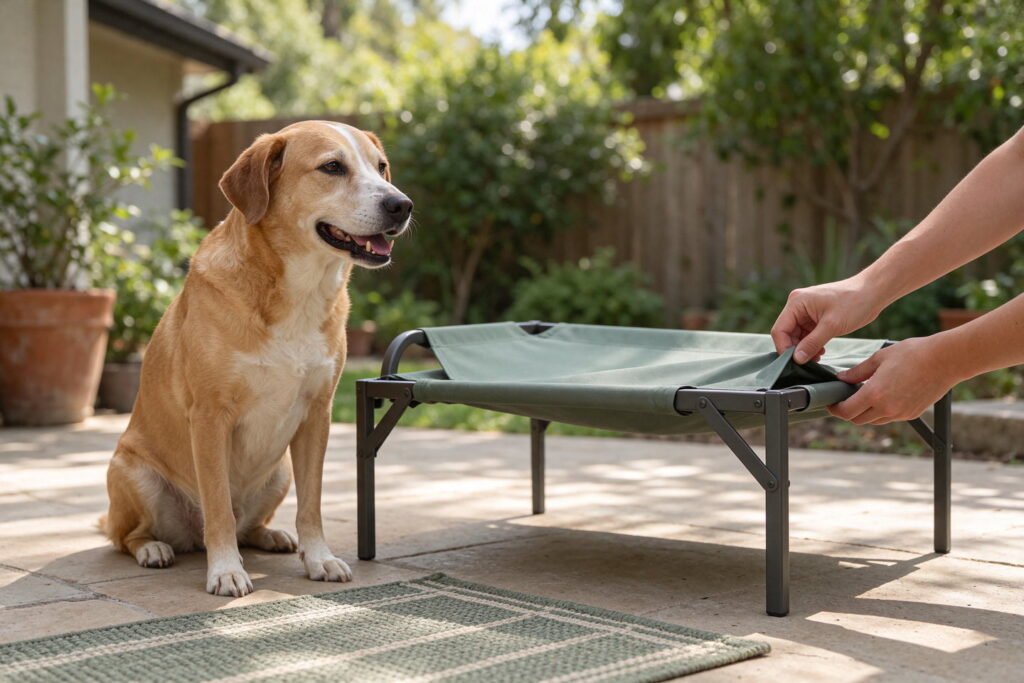
An elevated dog bed usually has a frame that holds a fabric or mesh surface above the ground. Some dogs like the open, firm feel, and the gap below the surface can allow more air to move than a thick cushion sitting directly on a floor. The American Kennel Club describes cot-style beds as one option to consider for airflow and outdoor lounging, while emphasizing that the bed should be durable, breathable, and easy to keep clean. That does not mean every elevated bed keeps every dog cool or suits every setting. AKC: Choosing the Right Dog Bed
A raised cot needs stable legs, a secure frame, and a sleeping surface appropriate for the dog’s size. Check the weight limit, dimensions, entry height, fabric tension, and whether the frame can slide on the surface where it will sit. A dog who is hesitant about stepping onto a frame may prefer a low mat. A senior dog, a dog with arthritis, or a dog recovering from an injury may need a different setup; ask a veterinarian rather than choosing solely from an “orthopedic” or “elevated” label.
Keep the bed in a shaded, ventilated area and supervise its use. A raised surface does not protect a dog from heat stress, cold, wind, or rain. Make sure fresh water is available. If the surface becomes hot, wet, unstable, or dirty, move your dog and clean or dry the bed before using it again.
Weather matters more than the bed label
An outdoor dog bed is not a substitute for monitoring the weather. The American Veterinary Medical Association advises that dogs generally be kept indoors during cold weather and should not be left outside for long periods in below-freezing conditions. If a dog cannot be brought inside during cold weather, AVMA recommends a warm, solid shelter protected from wind, access to fresh unfrozen water, and thick, dry bedding that is changed regularly. It cautions against space heaters and heat lamps in shelters because of burn and fire risks. AVMA: Cold Weather Animal Safety
Cold tolerance varies. Coat, body size, health, age, and activity can all affect how a dog handles low temperatures. Wet bedding can make a resting area uncomfortable, and a dog who is shivering, weak, anxious, or trying to burrow for warmth should be brought inside. If you suspect cold injury or your dog has a medical condition, contact a veterinarian.
Warm weather needs a different check. AVMA advises providing outdoor pets with unlimited access to fresh water and shade, avoiding hot surfaces, and watching for signs of heat stress such as excessive panting, restlessness, unsteadiness, abnormal gum or tongue color, or collapse. Seek emergency veterinary care for serious heat-stress signs. An elevated bed may create airflow, but it cannot make an exposed sunny spot safe. AVMA: Warm Weather Pet Safety
For outdoor use, a bed should sit where the dog can retreat from sun, wind, and activity. Provide a clean, dry resting surface and check it before each use. If weather conditions are severe or changing quickly, bring your dog indoors rather than relying on bedding to compensate.
What does “indestructible dog bed” really mean?
“Indestructible dog bed” is a popular search phrase, but it is not a guarantee that a bed will survive every dog. Dogs may chew because of normal exploration, teething, boredom, frustration, stress, or other behavior needs. The ASPCA recommends managing access, offering appropriate alternatives, supervising when needed, and addressing the reason for destructive chewing. A tougher cover may resist some wear, but it cannot eliminate chewing or make swallowed fabric, foam, or hardware safe. ASPCA: Destructive Chewing
Look for precise claims rather than the word “chew-proof.” Ask what part of the bed is covered by a warranty, what damage is excluded, and whether the maker has tested a particular material or construction. A heavy-duty fabric, reinforced seams, or a metal frame may be useful product features when they are actually listed, but they are not proof that the whole bed is indestructible. Reviews can reveal common wear patterns, but one dog’s experience does not predict another dog’s chewing strength.
Inspect the bed regularly. If your dog pulls at a seam or tears open a cover, remove access to the damaged bed and check for loose pieces. Dogs can swallow stuffing, foam, fabric, or fasteners. If you think your dog swallowed part of a bed, contact your veterinarian for guidance. Do not punish chewing after the fact. ASPCA guidance favors preventing access to tempting items, providing suitable chew outlets, and supervising dogs who are still learning what is safe to chew.
If chewing happens mainly when your dog is alone, or comes with pacing, vocalizing, escape attempts, or other distress, the bed may not be the root problem. Ask your veterinarian or a qualified behavior professional for help. A replacement bed alone may not address anxiety, under-stimulation, or another cause.
How to compare outdoor bed materials and care
Read the full specification before focusing on color or style. Confirm the actual sleeping dimensions and weight limit. Check whether a cover can be removed, whether the bed is machine washable or only spot-cleanable, and how the product must dry. If the maker does not identify the material or care method, do not assume it can be hosed down or left outside.
A mesh surface may dry differently from thick foam, but the right choice depends on the dog and environment. Some dogs like a firm cot; others settle better on padding. A waterproof layer may simplify a spill cleanup, but a sealed surface can still get dirty, hot, or uncomfortable. Look at seams, attachment points, feet, and any moving or folding joints. For a portable bed, practice setting it up and taking it down before relying on it away from home.
Use a washable cover or mat only according to the maker’s instructions. Let a damp bed dry fully before storing it, and check for odors, mildew, frayed fabric, loose screws, or sharp edges. Keep outdoor beds away from lawn chemicals, standing water, and places where the dog may be exposed to toxic plants or pests. If the area has been treated with fertilizer or insecticide, follow the label’s pet-reentry instructions before letting your dog use it.
What Go-Shira currently offers
Go-Shira’s Pet Beds collection currently lists the JHK Calming Round Dog Bed as its dog-bed option. The live listing describes a plush faux-fur surface, a raised round rim, and a supplier-described grip-dot base. It lists Gray and Tea Brown colors, with L and XL variants. Those are product-page details to check when shopping; they do not describe an outdoor-rated, elevated cot or a chew-proof bed.
That distinction is important. The current JHK listing presents an indoor-style plush floor bed. Do not leave it exposed to weather or choose it as an outdoor bed unless the product’s current instructions specifically approve that use. If you want a raised outdoor cot, compare other products by their stated weather use, frame, fabric, care requirements, and weight rating instead of assuming this listing has features it does not claim.
A quick decision checklist
Before you buy, confirm the bed’s dimensions and supported weight. Match its surface to your dog’s preference. Verify whether the maker actually rates it for outdoor exposure and how it should be cleaned and dried. Choose a shaded, supervised location with fresh water and a safe indoor option nearby. If your dog chews, ask what the warranty really covers and plan safe chew outlets and supervision. For a senior dog or a dog with a medical issue, discuss the bed and access height with your veterinarian.
A good outdoor setup starts with the dog’s safety, not a product label. The bed is one useful piece of that setup, and it should be easy to bring inside, inspect, clean, and replace when it is damaged.
Frequently asked questions
Is there a truly indestructible dog bed?
No bed should be assumed indestructible. “Chew-proof” or “indestructible” may be a marketing claim, so check what the maker actually tests and warrants. Supervise chewing and remove damaged bedding that could be swallowed.
Is an elevated dog bed good for outdoors?
It can be a useful surface in a shaded, supervised area if the frame and fabric are suitable for outdoor use and match the dog’s weight and comfort. It does not replace shade, water, shelter, or bringing the dog inside when weather is unsafe.
What does “bed dog elevated” mean?
It is a search phrase some shoppers use for an elevated dog bed or raised cot. Compare the frame, surface, dimensions, weight rating, entry height, and care instructions rather than relying on the phrase alone.
Can I use the Go-Shira JHK bed outdoors?
The current listing describes a plush round floor bed and does not present it as weatherproof or outdoor-rated. Follow the live product instructions and use it as described; do not assume it is suitable for rain, direct sun, or an outdoor shelter.