
Can Dogs Eat Bananas, Strawberries, Pineapple, Cucumbers, and Cinnamon? A Safe Snacking Guide
Dogs are curious about the food on our plates, and a little fresh produce can look like an easy treat. But a food that is safe for people is not automatically suitable for every dog. Preparation, portion size, a dog’s health and the ingredients mixed into a recipe all matter.
The quick answer: plain banana, strawberries, fresh pineapple and cucumber can be offered to many healthy dogs in small, occasional portions. Cinnamon is different. It is not a useful dog treat, and concentrated cinnamon products or inhaled powder can cause problems. Below, we explain how to handle each food and what to do if your dog gets into something unsafe.
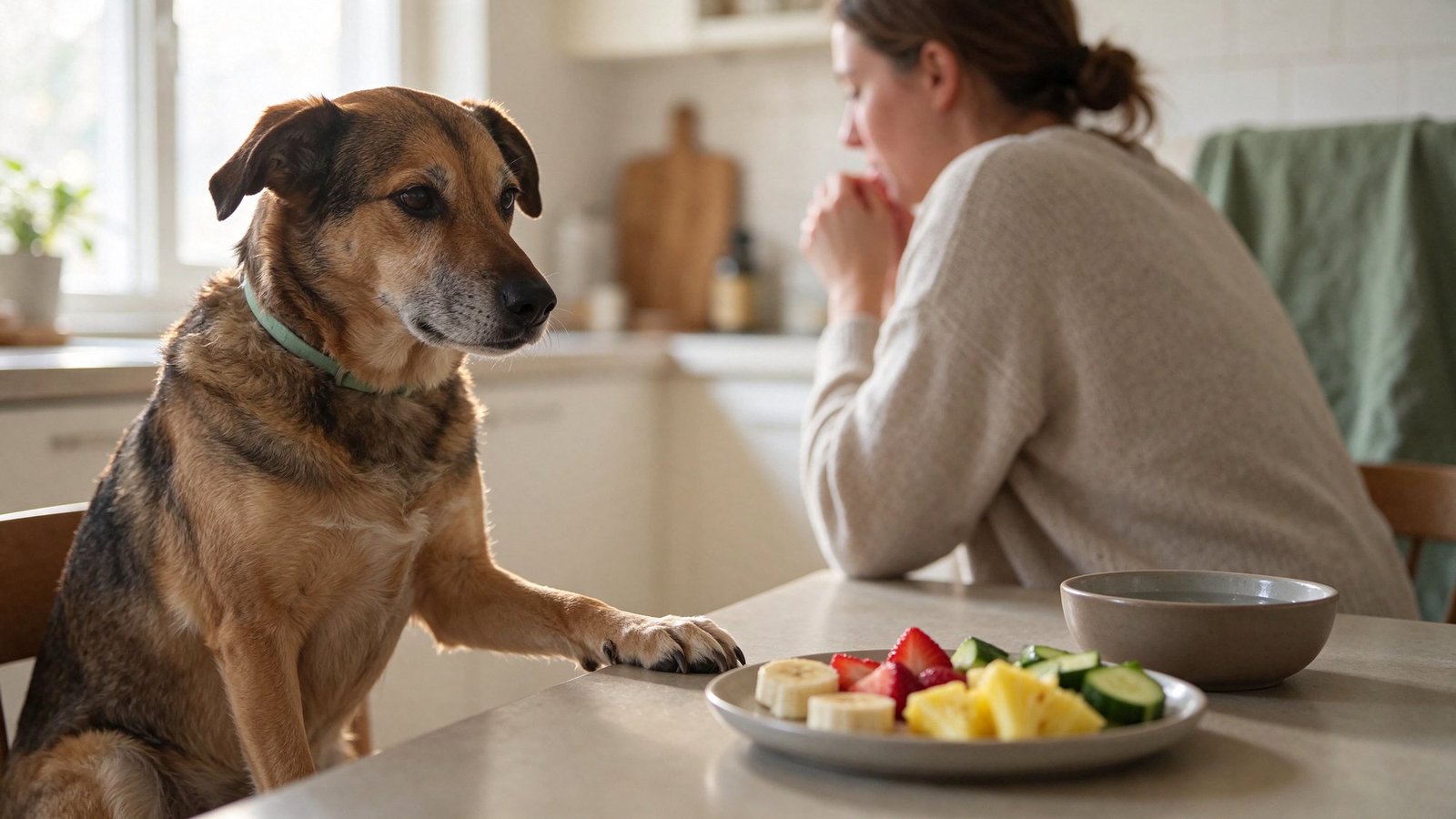
Plain fruit and vegetables should be offered in small pieces as occasional treats, not as a replacement for a complete dog food.
Can dogs eat bananas?
Yes. Most dogs can have a little plain banana flesh as an occasional treat. Banana is soft and easy to portion, but it contains natural sugar and calories, so a large serving is not a better serving. The American Kennel Club recommends treating banana as a snack rather than a main part of a dog’s diet.1
Remove the peel before offering banana. It is tough and fibrous, can be hard to digest, and may create a choking or obstruction risk if a dog gulps a large piece. Cut the flesh into pieces that suit your dog’s size and chewing style. If your dog gulps food, make the pieces especially small and offer them one at a time while you supervise.
Start with one small piece, especially if banana is new to your dog. Watch for loose stool, vomiting, gas or itching, and stop offering it if you notice a reaction. Dogs with diabetes, weight concerns, food sensitivities or a veterinary diet may need a different treat plan, so check with your veterinarian first.
Choose fresh, plain banana. Skip banana bread, banana chips with added sugar, and desserts or spreads where you cannot confirm every ingredient. The word “banana” on a package does not mean the whole product is dog-friendly.
Can dogs have strawberries?
Fresh strawberries can be an occasional treat for many dogs. Wash them well, remove the leafy tops, and cut the berry into small pieces before serving. Their natural sugar is a reason to keep portions modest, especially for small dogs or dogs that need to manage their weight.1
A whole strawberry may be too large for a small dog to swallow comfortably, while a frozen whole berry can be hard and slippery. If you offer frozen strawberry, thaw it enough to cut into manageable pieces. Give your dog a tiny amount the first time and see how their stomach responds before making it a regular snack.
Serve strawberries on their own. Avoid strawberry jam, syrup, sweetened yogurt, chocolate-dipped berries and desserts. These can add sugar, fat or other ingredients that are not appropriate for dogs. Never assume a smoothie or “sugar-free” snack is safe without checking its label; some sweetened foods contain xylitol, which is dangerous to dogs.3
If your dog has a medical condition or is on a prescribed food plan, ask your veterinarian before adding fruit. A few pieces may seem small, but treats add up across the day, particularly for smaller dogs.
Can dogs have cinnamon?
Cinnamon is not a recommended snack or supplement for dogs. A small accidental taste of ground cinnamon is generally less concerning than a large exposure, but that does not make cinnamon something to add to your dog’s food. Pet Poison Helpline notes that larger amounts of cinnamon powder can cause illness, and inhaled powder can irritate a dog’s mouth and airways. Cinnamon essential oil is concentrated and can be harmful even in smaller exposures.2
Keep spice jars, cinnamon sticks and essential oils out of reach. Do not sprinkle cinnamon powder where a dog might inhale it, and do not apply cinnamon oil to a dog’s coat or skin. If your dog has eaten a substantial amount, licked an essential oil, or is coughing, choking, vomiting or acting unusually, call a veterinarian promptly. Do not wait for symptoms after a possible essential-oil exposure.
Be especially careful with cinnamon-flavoured human foods. Cinnamon rolls, cookies and baked goods may contain a lot of sugar and fat, and recipes or “sugar-free” products can include other ingredients that are unsafe for dogs. Xylitol is one important example: the FDA warns that it can be found in some candies, baked goods, nut butters and other products, and that it can cause a rapid, dangerous drop in a dog’s blood sugar.3 If the label lists xylitol—or you cannot confirm what your dog ate—contact your veterinarian or an emergency clinic immediately.
Cinnamon and nutmeg are not interchangeable. Pet Poison Helpline also warns that nutmeg can cause serious effects at high exposures.2 Avoid sharing spiced food unless your veterinarian has confirmed every ingredient and portion is appropriate.
Can dogs have pineapple?
Many dogs can have a small amount of fresh pineapple flesh. Remove the prickly outer skin and leafy crown, then cut the soft fruit into small pieces. The AKC advises against canned pineapple packed in sweetened syrup; choose plain fresh fruit instead.1
Pineapple is naturally sweet, so keep the amount modest and treat it as an occasional extra. Do not give your dog the tough outer peel or crown. Avoid large chunks that may be difficult to chew or swallow, and supervise while your dog eats. A small taste is a sensible first serving, particularly for a dog that has not tried pineapple before.
Skip dried pineapple, fruit cups in syrup, candied fruit, juice blends and pineapple desserts. These products may have added sugar or ingredients that are not suitable for dogs. If pineapple causes vomiting, diarrhea or other signs of discomfort, stop serving it and contact your veterinarian if symptoms are repeated, severe or do not settle.
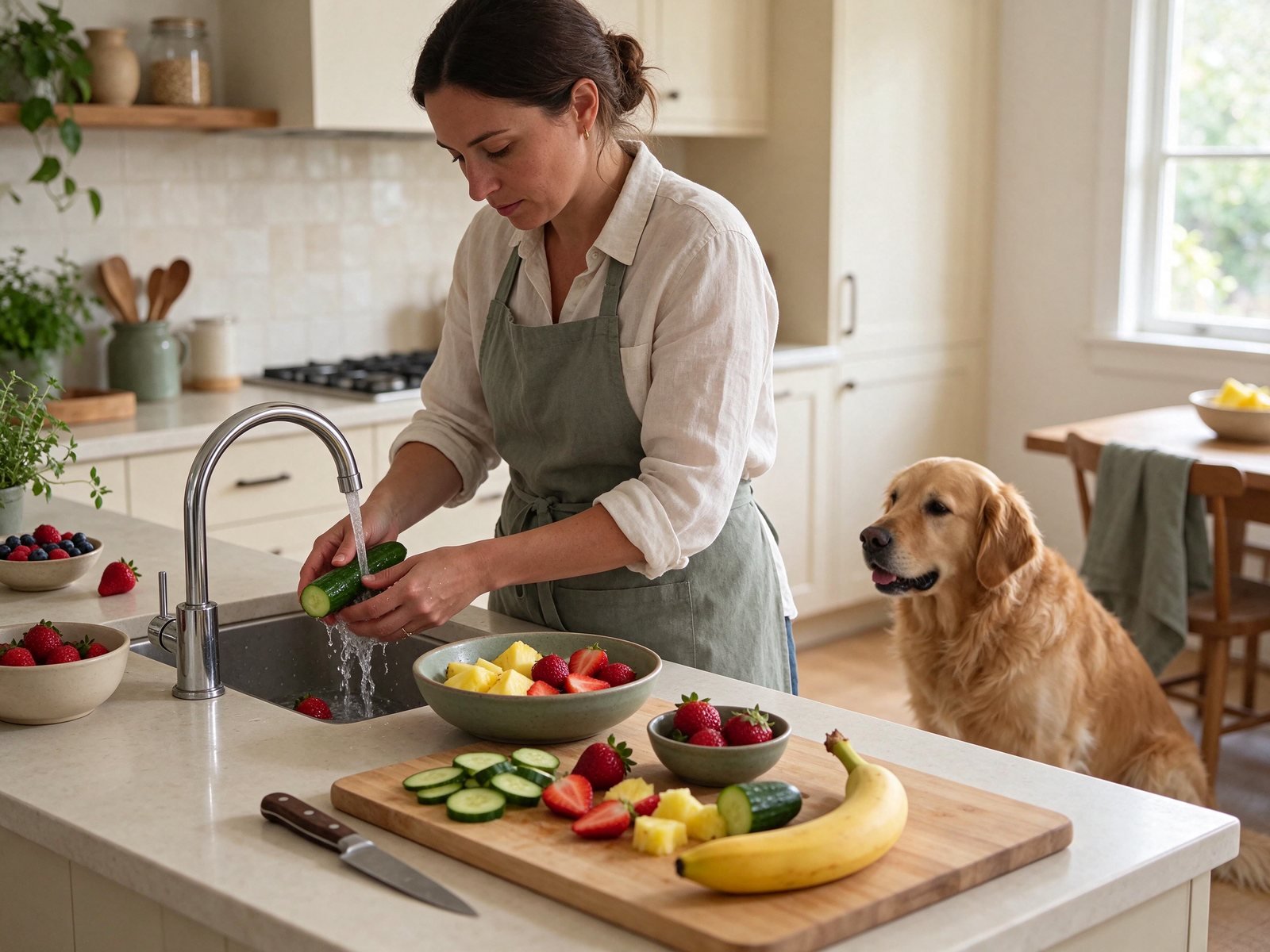
Wash produce, remove inedible or tough parts, and cut pieces to a size your dog can manage. Introduce one new food at a time so you can notice a reaction.
Can dogs eat cucumbers?
Yes, plain cucumber can be a refreshing, low-calorie snack for many dogs. The AKC lists cucumber among the vegetables dogs can eat and notes its high water content.1 Wash it first, then cut it into small pieces. Cucumber is not a complete meal, but a few plain pieces can add variety to a treat routine.
Do not hand over a whole cucumber or thick rounds to a dog that tends to gulp. Large pieces can be a choking risk. For a small dog, dice the cucumber finely; for a larger dog, use pieces that are still easy to chew and swallow. Keep the skin on or peel it according to what your dog tolerates, and start with a small amount if cucumber is new.
Pickles are not the same thing as plain cucumber. They can contain substantial salt, vinegar, garlic, onion or other seasonings. Avoid pickles, relish, seasoned cucumber salad and dips. If your dog has a sensitive stomach, a sudden serving of any new food may cause digestive upset, so stop if you see a reaction.
How to introduce a new food safely
A cautious approach makes it easier to spot what agrees with your dog. First, check that the food is plain and free of added sweeteners, sauces, seasoning or other ingredients. Wash fresh produce and remove tough, prickly or inedible parts. Then offer one small piece and wait to see how your dog responds before offering it again.
Do not introduce banana, strawberry, pineapple and cucumber all at once. If your dog develops loose stool, vomiting, gas, itching or another change, you will not know which food caused it. Pause the new foods and contact your veterinarian if symptoms are severe, persist or occur alongside lethargy, swelling or breathing difficulty.
Keep snacks occasional and account for everything your dog eats in a day. A dog who is overweight, very young, elderly, diabetic, prone to digestive problems, or eating a prescription diet may need individualized advice. Your veterinarian can help you choose treat options and portions that fit your dog’s size, health and regular food.
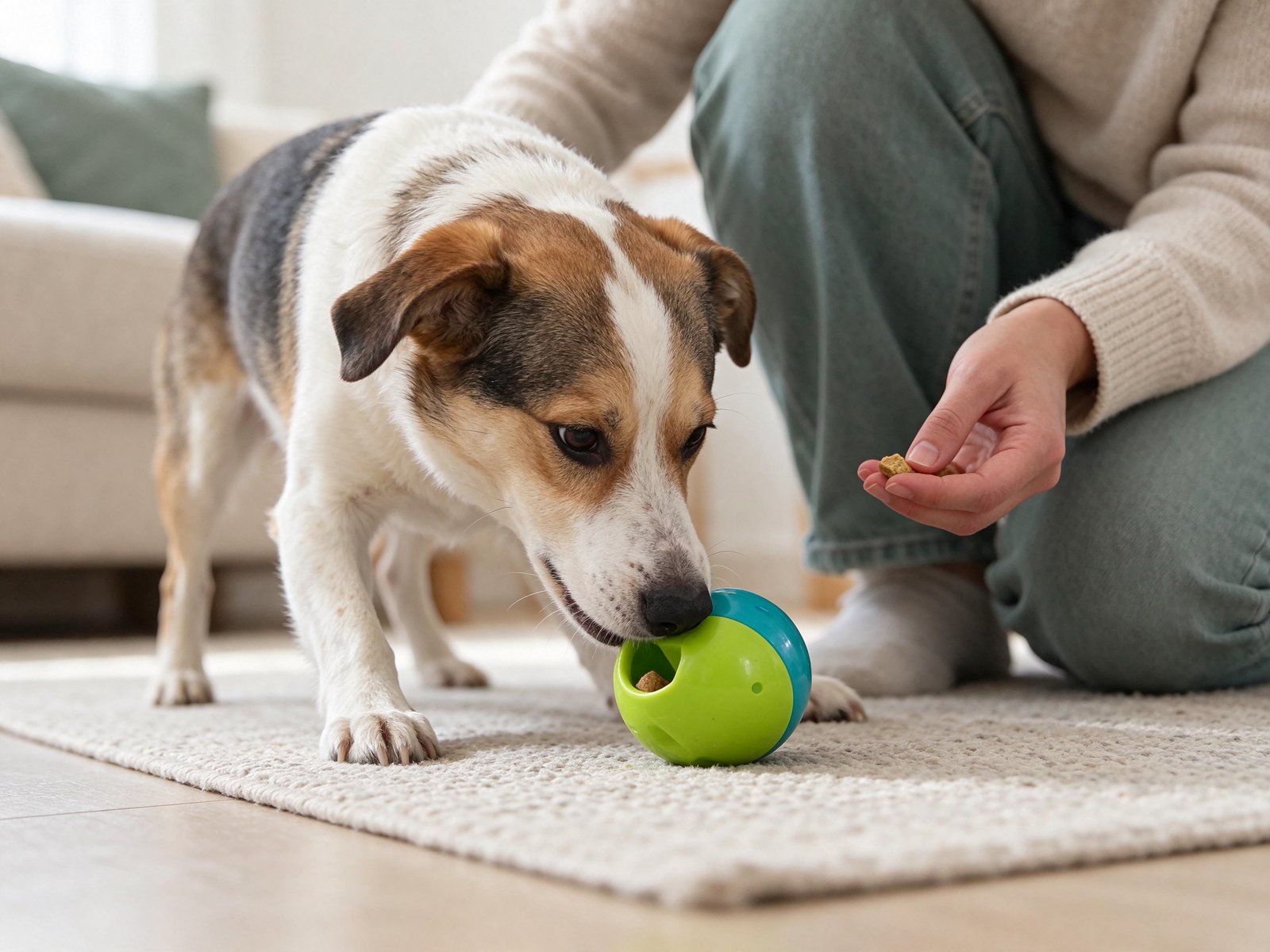
Treat puzzles can make snack time more engaging, but supervision and suitable portions still matter.
For dogs who enjoy working for a snack, Go-Shira’s Interactive Dog Treat Puzzle Ball for Enrichment is an optional way to offer a few approved treats or part of a measured kibble portion during supervised play. It is an enrichment toy, not chew-proof, not a substitute for a balanced meal, and does not guarantee slower eating or a behavior outcome. Follow the product guidance, supervise your dog, and stop using any toy that becomes damaged.
When to call a veterinarian
Call your veterinarian, an emergency clinic or an animal poison-control service right away if your dog may have eaten xylitol, cinnamon essential oil, a large amount of cinnamon powder, or a food with ingredients you cannot identify. Keep the packaging or ingredient list nearby and note approximately how much was eaten and when. Do not try to make your dog vomit unless a veterinary professional specifically tells you to.
For an ordinary small taste of plain fruit, monitor your dog for digestive upset. Repeated vomiting or diarrhea, marked tiredness, signs of pain, swelling, coughing, choking or difficulty breathing deserve prompt veterinary advice. When in doubt, tell the clinic your dog’s weight, health conditions, what they ate and the approximate amount. Fast, accurate details help the veterinary team decide what to do next.
The short answer
Dogs can usually enjoy small, plain pieces of banana, strawberries, fresh pineapple or cucumber as occasional treats, provided the food is prepared safely and suits the individual dog. Cinnamon is not necessary in a dog’s diet; keep powder and essential oil away, and be cautious with baked goods because of hidden ingredients such as xylitol. Introduce new foods one at a time, keep portions modest, and ask your veterinarian when your dog’s health or the ingredients are uncertain.
This article is general educational information, not a diagnosis or a substitute for advice from your veterinarian.