
Why Is My Cat Vomiting? Common Causes, Warning Signs & What to Do
If you are asking, “why is my cat vomiting?”, the most helpful answer is that vomiting is a symptom, not a diagnosis. A cat may bring up a hairball or react to something it ate, but vomiting can also accompany a blockage, toxin exposure, or an underlying illness. One isolated episode in a cat who quickly returns to normal is different from repeated vomiting or vomiting with other symptoms. When in doubt, call your veterinarian and describe what happened rather than trying to diagnose the cause at home. VCA Animal Hospitals
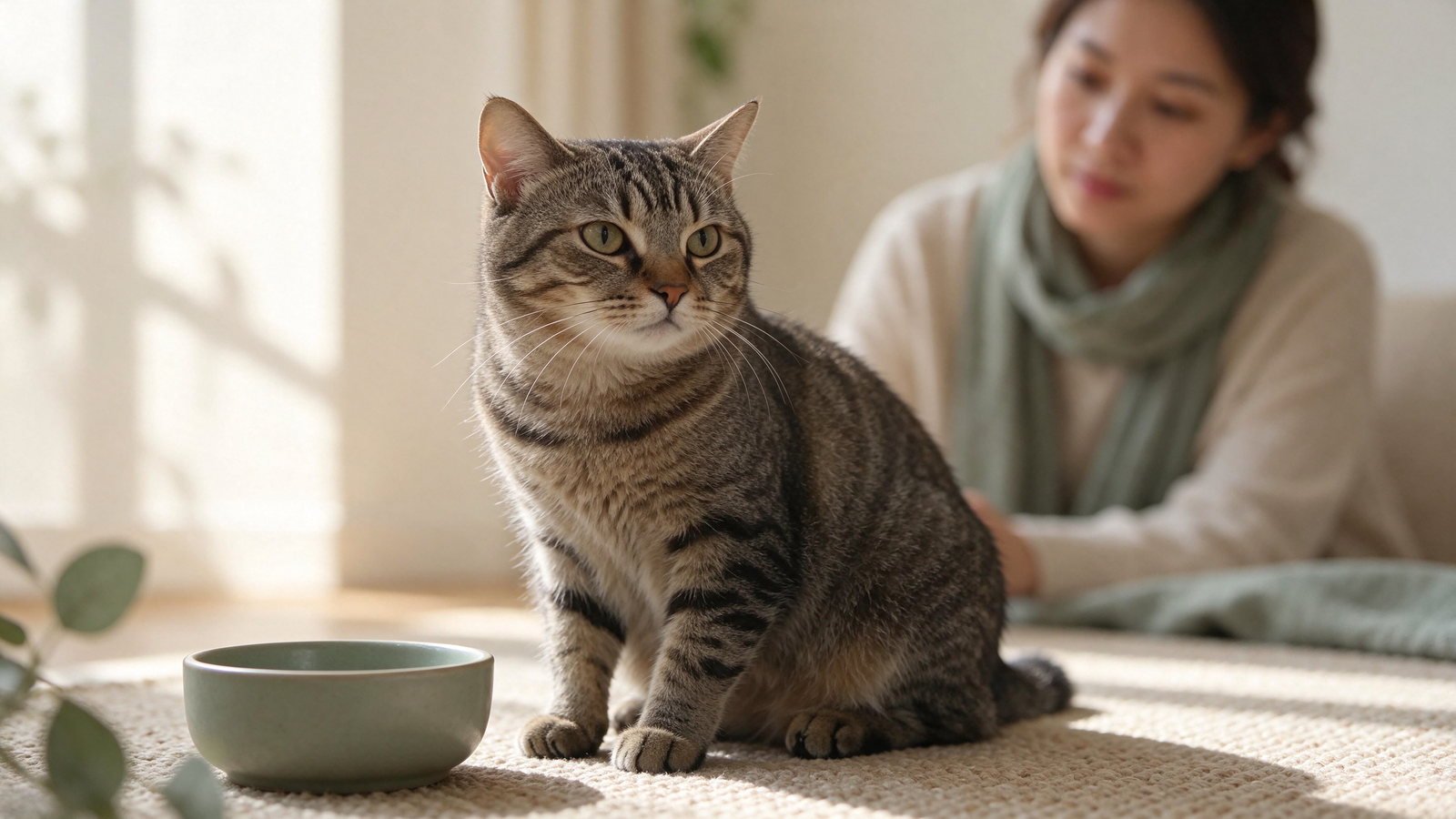
First, make sure it is vomiting
True vomiting usually involves effort. A cat may look nauseated, lick its lips, swallow repeatedly, retch, and contract its abdomen before bringing up food or fluid. Regurgitation is usually more passive: undigested food or water comes back up quickly, often soon after eating or drinking, without the same abdominal heaving. Coughing can also end with a cat swallowing or bringing up a small amount of foam, and can be mistaken for vomiting. VCA Animal Hospitals
If you are unsure what you saw, take a short video only if it is safe and does not delay care. A video can help your veterinarian distinguish vomiting from coughing or regurgitation. Describe the timing, effort, and what came up. Those details may be more useful than trying to name the problem yourself.
The appearance of the material can add clues, but it cannot diagnose the cause. Partly digested food, clear fluid, foam, yellow fluid, or fur can come from different situations, and a single sample is not a reliable home test. Take a photo if possible, then tell the clinic when it happened and how your cat acted before and afterward. Bright blood, repeated vomiting, or a sudden change in behavior is more important than trying to decode one color. Do not assume the cat is safe because the vomit looks ordinary, and do not assume yellow fluid proves a particular disease. Your veterinarian will interpret the appearance alongside the history and examination. If possible, note whether it followed a meal, medication, or access to a plant or object.
Common reasons a cat may vomit
Hairballs and swallowed fur
Cats swallow loose fur while grooming. Sometimes the fur collects in the stomach and is expelled as a damp clump, often shaped like a narrow tube. A hairball can be an occasional explanation, particularly in a cat that grooms heavily, but “it is only a hairball” should not become the default explanation for frequent vomiting. Repeated episodes, changes in appetite or energy, or ongoing gagging deserve veterinary advice. Brushing can reduce loose fur, but it does not rule out another cause.
Food and eating habits
A sudden change in food, eating too quickly, overeating, spoiled food, table scraps, or a food ingredient a cat does not tolerate may upset the stomach. Cats may also swallow insects or nibble plants. The timing can offer clues: for example, bringing up undigested food soon after a meal may be regurgitation rather than vomiting. Still, timing alone cannot confirm the cause. If episodes recur after meals, share the feeding schedule and food details with your veterinarian before making major diet changes.
Something swallowed or a toxin
String, ribbon, thread, hair ties, rubber bands, small toys, and other objects can irritate or obstruct the digestive tract. Household chemicals, human medicines, some plants, and certain foods can also be dangerous. A cat that may have swallowed an object or toxin needs prompt veterinary guidance, even if it looks normal at first. Do not pull a visible string from your cat’s mouth or rear, and do not try to make your cat vomit. Call a veterinarian or emergency clinic and follow its instructions.
Parasites, infection, or digestive disease
Intestinal parasites, infections, inflammation, constipation, and other digestive problems can cause vomiting. A veterinarian may ask about stool changes, deworming history, appetite, weight, and exposure to other animals. Bring a fresh stool sample only if the clinic requests one; do not delay an urgent visit to collect it.
Illness beyond the digestive tract
Vomiting may also occur with kidney or liver disease, diabetes, thyroid disease, pancreatitis, urinary obstruction, or cancer. These problems cannot be identified reliably from the appearance of vomit. A cat that vomits and also becomes weak, stops eating, drinks or urinates much more or less than usual, loses weight, or has diarrhea needs a veterinary assessment. Cornell’s Feline Health Center lists several digestive, metabolic, and other conditions among the possible causes of feline vomiting. Cornell Feline Health Center
When is cat vomiting an emergency?
Seek emergency veterinary care now if your cat is repeatedly vomiting over a short period, cannot keep water down, is collapsing or severely weak, appears to have significant abdominal pain, or has blood in the vomit. Treat suspected poisoning or swallowing a string, toy, or other foreign object as urgent. Do not wait for more symptoms when a dangerous exposure or obstruction is possible.
Contact your regular veterinarian promptly if vomiting happens again, continues, or comes with reduced appetite, lethargy, diarrhea, fever, dehydration, weight loss, or a noticeable change in drinking or urination. A kitten, senior cat, or cat with a chronic health condition may need advice sooner because vomiting can become serious more quickly. Merck Veterinary Manual advises a detailed veterinary examination for long-term or severe vomiting, repeated vomiting more than once or twice daily, or vomiting accompanied by signs such as blood, pain, weakness, dehydration, or fever. Merck Veterinary Manual
If vomiting appears alongside a new litter-box problem, mention both changes to the vet. Our related guide explains why a cat may pee or poop outside the litter box. The two symptoms do not prove a shared cause, but a combined timeline can help your veterinarian assess your cat.
What to do while arranging veterinary advice
Keep your cat in a quiet, comfortable place and make fresh water available. Do not force food or water, give human medicines, use leftover pet prescriptions, or start a home remedy unless a veterinarian tells you to. Do not impose a fast on your own; ask the clinic what to do about the next meal, especially if your cat is young, elderly, diabetic, or has another medical condition. If even small amounts of water trigger more vomiting, seek urgent care.
Move likely hazards out of reach, but do not spend time searching the home if your cat is deteriorating. If you suspect a toxin or swallowed object, keep the packaging or take a clear photo so the clinic can identify it. Never induce vomiting unless a veterinarian or poison-control professional specifically instructs you to do so.
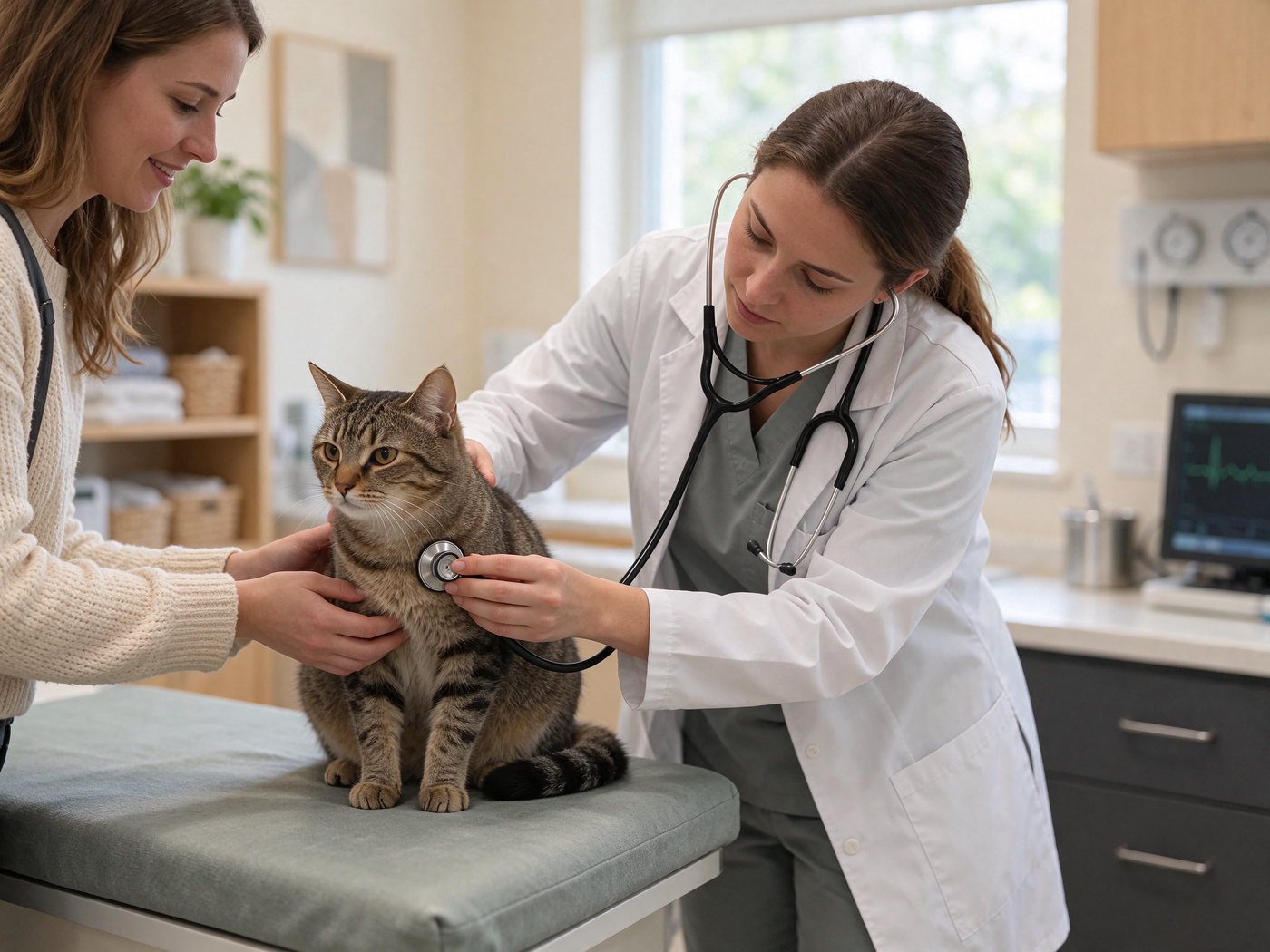
What information will help your veterinarian?
Before you call, note when the vomiting began, how many times it happened, and whether it followed food, water, medication, or access to something unusual. Record whether the material looked like food, clear fluid, foam, bile-colored fluid, fur, or blood. Note appetite, thirst, energy, stool, urination, and any signs of pain. Write down recent food changes, new treats, medications, plants or chemicals the cat could reach, and whether another pet is unwell.
A photo or brief video can be useful, but it is not a substitute for an examination. Keep the details factual: “vomited twice after breakfast and hid afterward” is more useful than guessing “food allergy.” If you cannot reach your regular clinic and your cat has emergency signs, call an emergency veterinarian.

How a veterinarian may investigate vomiting
Your veterinarian will start with your cat’s history and a physical examination. The clinic may ask about diet, access to hazards, vaccination or parasite prevention, medications, and changes in weight, thirst, and bathroom habits. Depending on the findings, testing may include blood work, urine or stool tests, X-rays, or ultrasound. More advanced procedures may be considered when vomiting persists or an obstruction or other serious disease is suspected. The goal is to find the cause and treat it—not simply to suppress the symptom. Cornell and VCA both describe diagnostic testing as one part of evaluating ongoing or concerning vomiting. Cornell Feline Health Center VCA Animal Hospitals
Treatment depends on the cause. A veterinarian may recommend fluids, a prescribed anti-nausea medicine, a specific diet, parasite treatment, or other care. A suspected foreign-body obstruction or toxin exposure may require urgent treatment. Do not give medication from your own cabinet: some drugs that are routine for people can harm cats, and the correct treatment depends on the diagnosis.
Can you prevent your cat from vomiting?
Not every episode is preventable, and prevention depends on the cause. Keep string, thread, hair ties, small toys, medications, cleaning products, and unsafe plants secured. Store food properly and avoid sudden diet changes; ask your veterinarian how to transition foods if a change is needed. Regular brushing may help reduce swallowed fur, especially for long-haired cats. If your cat eats very quickly, ask the vet whether smaller, more frequent meals or a slow feeder is appropriate. These steps may help with specific triggers, but they are not a substitute for an exam when vomiting repeats.
Keep a simple record if your cat has recurring episodes. A note with the date, time, meal, amount, behavior, and other symptoms can reveal a pattern and help your vet decide what to investigate. If a change in food or routine seems connected, record it instead of making several changes at once. That way, your veterinarian can interpret what happened more clearly.
Frequently asked questions
Is it normal for cats to vomit occasionally?
An occasional episode can happen, including when a cat brings up a hairball, but repeated vomiting should not be dismissed as normal. Contact your veterinarian if episodes recur, occur more than once in a day, or come with a change in appetite, energy, stool, drinking, or urination. The right threshold depends on the cat’s age, health, and symptoms.
Should I feed my cat after it vomits?
There is no one-size-fits-all feeding instruction for every cat or cause. Keep water available unless a veterinarian gives different instructions, and ask the clinic when to offer food and what type. Do not force food, withhold food for an extended period, or use a bland-diet recipe without veterinary guidance.
What if my cat vomits but otherwise seems fine?
Watch closely and note whether it happens again. If your cat remains alert, is drinking, and has no other symptoms, call your veterinarian for advice if you are uncertain, especially if vomiting repeats. Seek urgent care for blood, pain, weakness, collapse, suspected toxin or object ingestion, or inability to keep water down.
The takeaway
If you are wondering why is my cat vomiting, start by assessing how your cat is acting—not by assuming it is a hairball. Vomiting has many possible causes, and the same appearance can come from very different problems. Repeated episodes, blood, pain, weakness, dehydration, or a possible toxin or swallowed object call for prompt veterinary care. Make water available, avoid human medicines and home remedies, record what happened, and let your veterinarian guide the next step.