
Dog Beds for Large Dogs: Sizing, Support, Shared Beds & Ramps
Shopping for big dog dog beds can feel straightforward until your dog stretches out and hangs over the edge. Breed labels and weight alone do not tell you whether a bed has enough usable sleeping space. A better choice starts with how your dog rests, the measurements of the sleeping area, and the way your dog gets on and off the bed.
This guide compares floor beds with an elevated dog bed, explains what people may mean when they search for a “human dog bed,” and covers how to choose a dog ramp for bed access. It also looks at the actual large-dog bed and indoor stairs currently listed by Go-Shira, without treating their listed sizes as a fit guarantee.
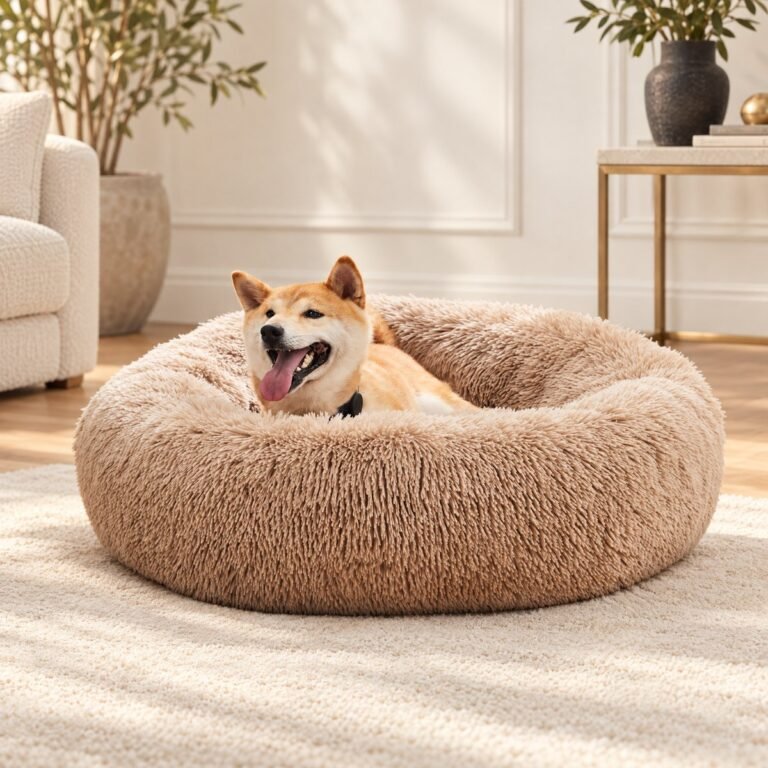
Start with how your dog sleeps
Watch your dog settle for a few minutes before shopping. Some dogs curl into a compact circle. Others stretch onto their side, sprawl diagonally, or change positions several times. A round bolstered bed may suit a dog who likes to curl against an edge. A dog who sleeps long and flat may need a broader, more open surface. The shape should match the resting position your dog actually uses, not only the photo that looks best in a room.
Measure your dog while they are lying in their most common relaxed position. Measure from nose to the base of the tail and from the front of the chest to the rear paws. Compare those measurements with the bed’s usable inside area, not only the outer diameter or the seller’s size label. A raised rim, bolster, or thick side wall can reduce the space available to lie flat. If you cannot find an inside measurement, ask the seller rather than assuming the outer dimensions are all sleeping space.
Then consider how much your dog moves during sleep. A dog who curls tightly may fit a smaller area than the same dog when fully stretched. If you are between sizes, look at the actual dimensions, return conditions, and the room available at home. Do not treat “large,” “XL,” or “giant breed” as standardized measurements across brands.
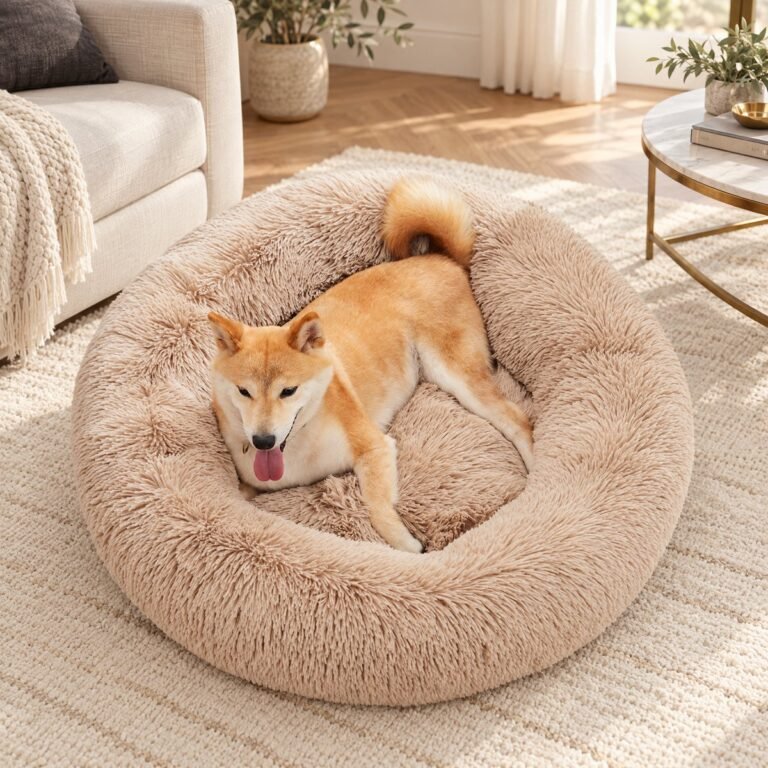
How to compare dog beds for large dogs
Large dogs put more body weight on the bed than small dogs, so construction and support matter. A bed that flattens quickly can become uncomfortable even if it looks thick in a product photo. Look for a clear description of the filling or support material, the finished dimensions, and the maker’s weight guidance. If the listing does not provide a weight limit or construction detail, ask before buying rather than trying to infer it from a staged image.
Comfort is individual. Some dogs prefer a flatter surface where they can sprawl; others like a raised edge to rest their head against. An older dog or a dog with a diagnosed joint or back problem may need a different setup from a healthy adult. The American Kennel Club notes that supportive bedding can be useful for dogs with age-related joint concerns and recommends considering the dog’s size and cleaning needs when choosing a bed. A new bed is not treatment for pain, arthritis, or an injury. If your dog hesitates to lie down, gets up stiffly, or reacts when touched, ask your veterinarian what sleeping surface and access setup are appropriate. AKC: Choosing the Right Dog Bed
Check the cover and care details before purchase. A removable washable cover is convenient, but the instructions may not permit washing the whole bed. Confirm whether a liner is water-resistant, whether the filling can be cleaned, and whether the cover fits tightly after washing. For a large bed, also check whether it can fit in your washer and where it will dry. “Easy to clean” should be supported by a specific care instruction, not only a product adjective.
Elevated dog bed or cushioned floor bed?
An elevated dog bed is usually a cot-style frame with a fabric or mesh sleeping surface held above the floor. Some dogs like the airflow and the more open feel. Others prefer a soft padded surface or do not feel comfortable stepping up onto a frame. An elevated design is not automatically cooler, more supportive, or better for every dog; those outcomes depend on the materials, fit, room conditions, and the dog’s own comfort.
Before choosing a raised cot, check the maximum supported weight, frame strength, sleeping-surface dimensions, entry height, and whether the maker describes it for indoor use, outdoor use, or both. Look at how the frame rests on the floor and whether the surface is taut enough to stay stable without sagging. For a dog who is unsure about heights or has mobility problems, a floor-level bed may be easier to enter and leave.
The current Go-Shira Pet Beds collection does not list an elevated dog cot. The dog option is a plush, round floor bed. That distinction matters: do not choose a product for outdoor or raised-bed use unless the product listing actually supports that use.
What does “human dog bed” mean?
The phrase “human dog bed” can describe different things. Some shoppers mean a human-sized mattress that a dog can share. Others mean an oversized dog bed that gives a person room to lie beside a pet. Before searching by the phrase alone, decide whether you want a shared sleeping surface or a separate dog bed placed beside your own.
For a shared bed, measure the space for both sleepers and think about whether you and your dog can change positions without pushing one another toward an edge. Keep a separate dog bed nearby so your dog has another place to settle. The AKC describes both potential benefits and drawbacks of bed-sharing, including disrupted sleep for some owners; it also suggests considering whether a large dog has enough safe space and providing an alternative resting place. AKC: Should I Let My Dog Sleep With Me?
Bed-sharing is a household choice, not a product feature that every dog needs. If your dog guards sleeping space, growls when moved, or seems anxious at night, speak with a veterinarian or qualified behavior professional before changing sleeping arrangements. If a dog has trouble jumping down from a tall human bed, consider a floor-level bed or an access aid that fits the dog and furniture, rather than encouraging repeated leaps.
Choosing a dog ramp for bed access
A dog ramp for bed access can help some dogs reach a raised sleeping surface without jumping. A set of stairs is another option. Neither is automatically suitable for every dog: the aid must fit the bed height, leave enough floor space, support the dog’s weight, and feel secure underfoot.
Measure from the floor to the top of the mattress. Then compare that height with the aid’s highest step or platform and check the full footprint. A ramp needs enough length for a comfortable slope; a short, steep ramp may not be easier than a jump. For stairs, compare the step height and tread depth with your dog’s stride. Look for a slip-resistant surface, enough width for your dog to place all four paws, stable contact with the floor, and a clearly stated weight limit. The AKC recommends considering traction, width, height, strength, purpose, and the dog’s comfort when selecting stairs or a ramp. AKC: Does Your Dog Need Dog Stairs or a Ramp?
Introduce the aid gradually. Let your dog inspect it while it is flat or at its lowest setting, reward calm approaches, and practice one step at a time. Do not pull, push, or force a dog onto a ramp. If your dog appears painful or cannot use the aid confidently, stop and ask your veterinarian whether a different access plan is safer.
Go-Shira’s current Curved-Step Foam Dog Stairs listing describes indoor foam steps with 3-, 4-, or 5-layer options, a removable cover, and a non-slip bottom. It is a stair product, not a continuous ramp, and its page does not state a maximum dog weight. Do not assume it is suitable for a large dog until the dimensions and weight capacity are confirmed for your specific dog and bed.
What the Go-Shira dog bed listing actually says
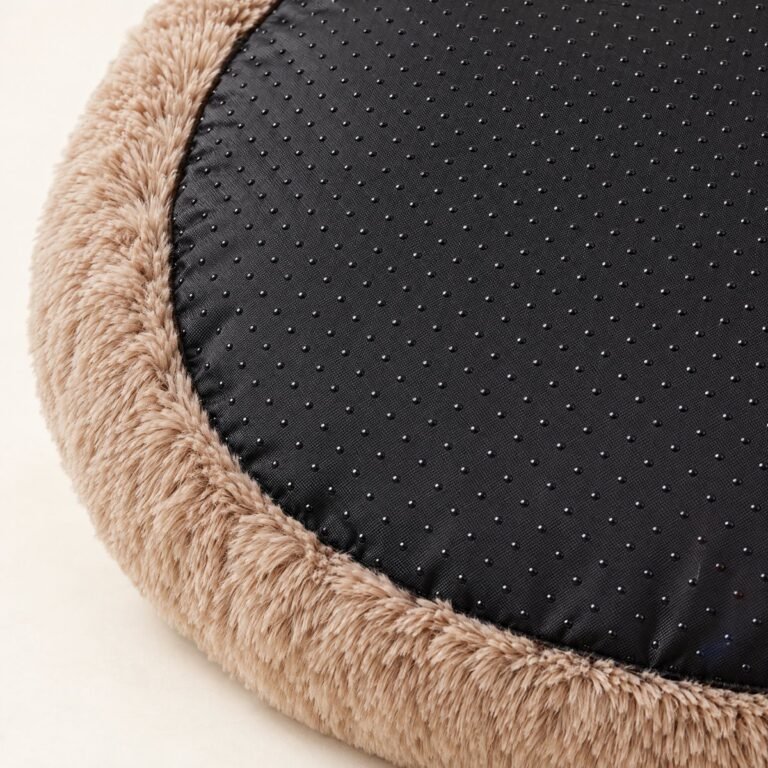
The JHK Calming Round Dog Bed is the current dog-bed option in the Pet Beds collection. Its listing describes a raised round rim, a faux-fur surface, and Gray or Tea Brown colors. It lists size L at 30 × 30 × 8 inches with suggested dog weight up to 45 pounds, and XL at 36 × 36 × 8 inches with suggested weight up to 90 pounds. The listing calls those measurements and weights guidance; they are not a promise that every dog of that weight will fit comfortably.
The bed is a plush floor bed, not an elevated frame, outdoor-rated cot, or shared human-size mattress. Measure your dog’s resting position and compare it with the listed bed dimensions before choosing. Review the product page for current variants and care instructions, because product details can change.

A practical shopping check
Before buying, write down your dog’s sleeping measurement and preferred position. Confirm the usable sleeping area, filling or frame construction, listed weight guidance, cover care, and return terms. For a raised bed, check the entry height and stability. For a ramp or stairs, measure your bed and verify the access aid’s dimensions, traction, and weight limit. If the bed is for a dog with a medical condition, ask your veterinarian what features matter for that dog.
A roomy bed is useful only when your dog can enter it, settle comfortably, and stay safe getting out. The most reliable choice is the one that matches your dog’s body, habits, and home—not the one with the biggest size label.
Frequently asked questions
What size dog bed is best for a large dog?
Use your dog’s relaxed sleeping measurements and compare them with the bed’s usable inside dimensions. Check the maker’s weight guidance and look at how much space any bolster or rim takes up. Size names such as L and XL differ between products.
Is an elevated dog bed good for large dogs?
It can suit a dog who likes a raised cot and can step onto it confidently, but check the bed’s weight limit, frame stability, sleeping area, and entry height. A floor bed may be easier for a dog with mobility concerns.
Do I need a dog ramp for bed access?
Not every dog does. A ramp or stairs may help reduce repeated jumping for some dogs, but it must be stable, the right height, wide enough, and appropriate for the dog’s condition. Ask a veterinarian if your dog is in pain or recovering from an injury.
Is there a Go-Shira bed made for people and dogs to share?
The current Pet Beds collection does not list a human-sized shared mattress. It lists a round plush dog bed intended as a dog’s own resting spot. Check the live collection for current availability.